


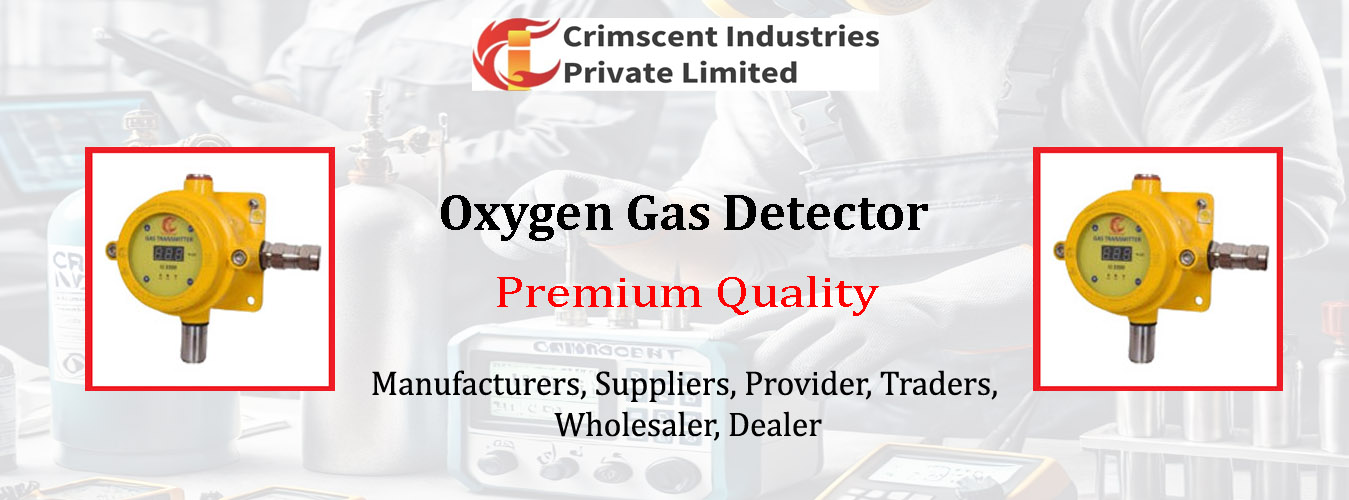
We are leading Oxygen Gas Detector Manufacturers, Oxygen Gas Detector Suppliers, Oxygen Gas Detector Provider, Oxygen Gas Detector Traders, Oxygen Gas Detector Wholesaler, Oxygen Gas Detector Dealer, and Oxygen Gas Detector Exporter in Mumbai, Navi Mumbai, Thane, and India. Our Oxygen Gas Detectors are known for their accuracy, reliability, and durable performance under industrial and laboratory conditions.
As trusted Oxygen Gas Detector Manufacturers and Oxygen Gas Detector Suppliers, we provide customized solutions for all types of environments. Our Oxygen Gas Detector Provider services include professional guidance and support. Being leading Oxygen Gas Detector Traders, Oxygen Gas Detector Wholesaler, Oxygen Gas Detector Dealer, and Oxygen Gas Detector Exporter, we ensure timely delivery across Mumbai, Navi Mumbai, Thane, and India.
Manufacturers, Suppliers, Providers, Exporters of Oxygen Gas Detectors in Mumbai, Navi Mumbai, Thane, In India.
Find answers to common questions about oxygen gas detectors, oxygen deficiency monitoring, oxygen enrichment detection, sensors, installation, and industrial applications.
An oxygen gas detector monitors the concentration of oxygen in the atmosphere. It can be used to identify oxygen deficiency or oxygen enrichment in industrial and enclosed environments.
Oxygen monitoring can help identify atmospheres where oxygen concentration has moved outside the desired safe operating range. Oxygen deficiency can create an asphyxiation hazard, while oxygen enrichment can increase fire risk.
An oxygen sensor measures the concentration of oxygen in the surrounding atmosphere and generates a signal corresponding to the measured concentration. The detector can display the value and/or transmit it to a control system.
Electrochemical oxygen sensors are commonly used for oxygen measurement. The appropriate sensor depends on the required range, application, and environmental conditions.
An oxygen deficiency monitor is a gas detection device designed to warn when oxygen concentration falls below a specified alarm level. Such systems are used in areas where inert gases or other gases can displace oxygen.
An oxygen enrichment detector monitors the atmosphere for oxygen concentrations above the normal atmospheric level and can provide an alarm when a configured threshold is exceeded.
Installation locations depend on the source of oxygen displacement or enrichment, ventilation, room layout, process equipment, and risk assessment.
Normal atmospheric air contains approximately 20.9% oxygen by volume. Gas detection systems may be configured with low- and high-level alarms depending on the application.
The price depends on sensor type, measurement range, enclosure, display, outputs, certification, and other application requirements.