


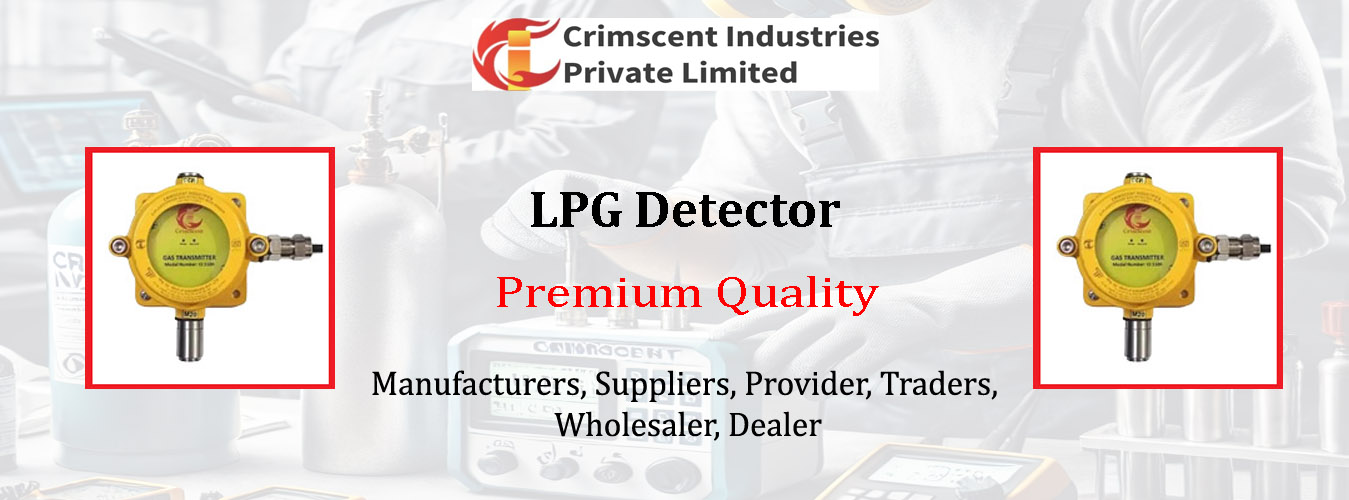
We are leading LPG Detector Manufacturers, LPG Detector Suppliers, LPG Detector Provider, LPG Detector Traders, LPG Detector Wholesaler, LPG Detector Dealer, and LPG Detector Exporter in Mumbai, Navi Mumbai, Thane, and India. Our LPG Detectors ensure quick and accurate detection of LPG leaks, enhancing safety in residential, industrial, and commercial environments.
As trusted LPG Detector Manufacturers and LPG Detector Suppliers, we offer precision-engineered LPG leak detection systems suitable for various applications. Our LPG Detector Provider services include product consultation, customization, and technical support. Being reliable LPG Detector Traders, LPG Detector Wholesaler, LPG Detector Dealer, and LPG Detector Exporter, we ensure timely distribution across Mumbai, Navi Mumbai, Thane, and India.
LPG Detector Manufacturers, LPG Detector Suppliers, LPG Detector Provider, LPG Detector Traders, LPG Detector Wholesaler, LPG Detector Dealer, LPG Detector Exporter in Mumbai, Navi Mumbai, Thane, India.
Find answers to common questions about LPG gas leak detectors, sensors, installation, certification, and industrial applications.
An LPG gas leak detector is designed to detect leakage or accumulation of liquefied petroleum gas, primarily propane and butane. It is used in applications such as LPG storage, cylinder areas, industrial kitchens, commercial kitchens, bottling plants, and other LPG installations.
A combustible gas detector with an LPG-compatible sensor is used for LPG detection. Depending on the application, catalytic bead, semiconductor, infrared, or other suitable technologies may be used.
The detector senses LPG concentration in the surrounding air and converts the detected gas concentration into an electrical signal. Industrial detectors can transmit the signal to a gas detection control panel, PLC, BMS, or alarm system.
The appropriate LPG detector depends on the application rather than one universal specification. For industrial hazardous areas, factors such as PESO certification, flameproof construction, detection range, sensor type, IP rating, and output signal should be considered.
A flameproof LPG gas detector is designed for LPG monitoring in hazardous areas where flammable gas may be present. It typically uses a suitable hazardous-area enclosure and sensor arrangement appropriate for the installation.
It is an LPG gas detection product designed and certified or approved, as applicable, for the relevant hazardous-area requirements under PESO. Customers should verify the exact certification applicable to the specific product and installation.
The detector location depends on the properties of LPG, the potential leakage sources, ventilation, room geometry, and the applicable design requirements. LPG is generally heavier than air, so low-level accumulation can be important when determining detector locations.
There is no single number applicable to every installation. The quantity depends on the size and layout of the area, potential leakage sources, ventilation, risk assessment, and applicable standards or project specifications.
Catalytic bead and semiconductor sensors are commonly used for LPG detection, while other technologies may also be suitable depending on the application. The sensor should be selected based on the required detection range, environment, response characteristics, and certification requirements.
Many combustible gas detectors measure LPG in %LEL. A common industrial measurement range is 0–100% LEL, although other ranges may be available depending on the detector design.
The price depends on whether the detector is flameproof, PESO certified, the sensor technology, enclosure, display, output signal, and other specifications. A manufacturer can provide a quotation based on the required configuration.
LPG and PNG have different gas compositions and physical properties. LPG is primarily propane and butane, while PNG is predominantly methane. The detector and sensor should therefore be selected according to the gas being monitored and the application.